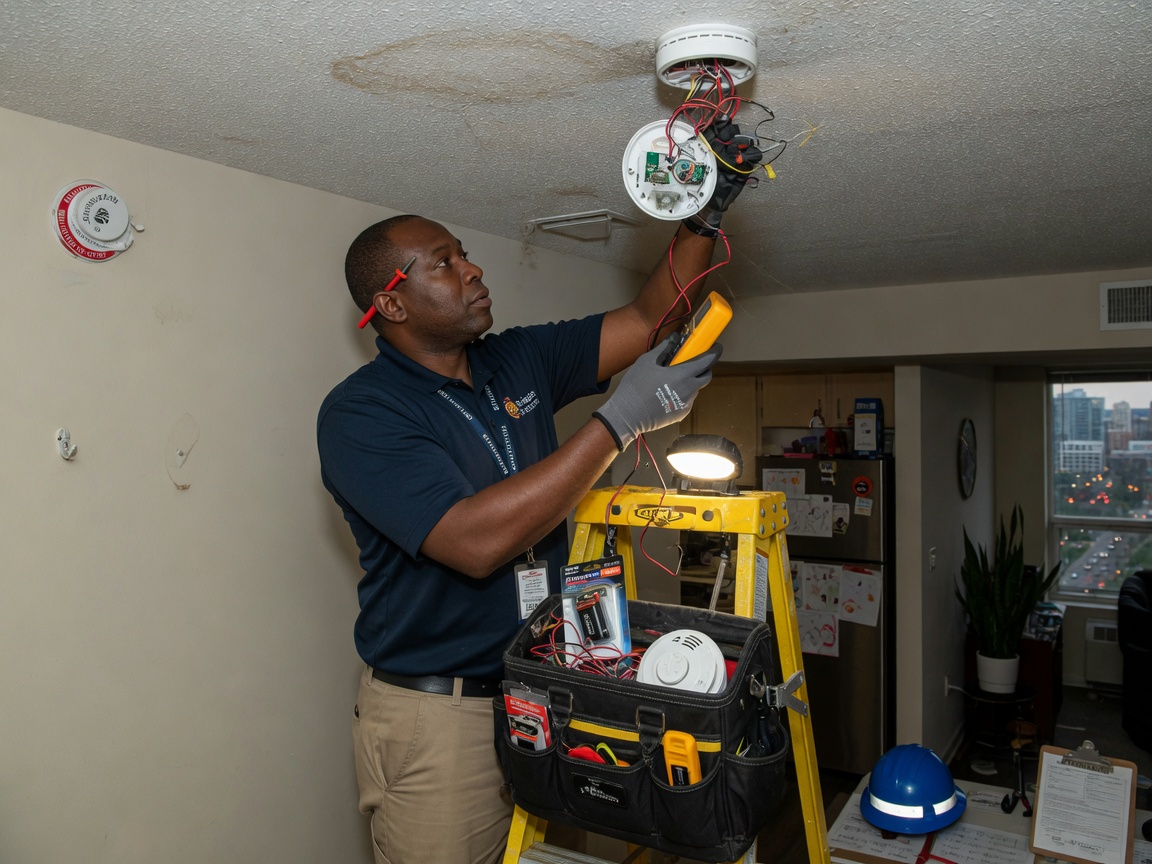
Arlington’s housing stock spans decades, with many East Arlington and South Arlington neighborhoods featuring homes from the 1970s and 1980s that often contain aluminum wiring or early hardwired detectors. These systems are prone to loose connections that trigger nuisance alarms during the hot, humid summers common in Tarrant County. Technicians routinely check junction boxes for heat-related expansion and replace detectors that no longer meet current interconnect standards required when homes sit near high-traffic areas such as AT&T Stadium or Globe Life Field.
Mild winters still bring enough temperature swings to affect battery performance in battery-operated units installed in North Arlington and near the University of Texas at Arlington campus. Condensation inside older can lights and attic spaces can corrode contacts, so repair work frequently includes swapping out sealed units rather than attempting component-level fixes. Electricians also verify that interconnected systems communicate properly across multi-story homes common in Mansfield-adjacent subdivisions.
Code updates in Texas emphasize placement within 10 feet of sleeping areas and on every level, including basements if present. When repairing detectors in Downtown Arlington properties that have undergone renovations, technicians confirm that new units tie into existing circuits without overloading panels typical of mid-century builds. Homeowners are advised against mixing ionization and photoelectric models on the same circuit because the differing response times can leave gaps in coverage during the rapid humidity changes that follow summer storms.
Technician insight
In Arlington the thing that catches most people out with Smoke Detector Repair is aluminum wiring in East Arlington homes from the 1970s and 1980s. The connections loosen over time from summer heat cycles and create intermittent faults that standard testers miss until the whole system is pulled apart.
False Alarms In South Arlington Ranch Home
A homeowner in South Arlington reported repeated false alarms on the main floor. Inspection revealed loose aluminum wiring connections at two bedroom detectors installed in the original 1982 construction. The connections were cleaned and secured, two heads were replaced to restore proper interconnection, and the system tested cleanly across the house.
Smoke Detector Repair Services We Offer
✓Hardwired Smoke Detector Repair
Diagnose and fix wiring faults in interconnected systems common in 1980s Arlington homes so every unit responds during an event.
✓Battery Replacement and Testing
Replace batteries and test units in battery-operated detectors to prevent false alarms during humid summer nights in South Arlington.
✓Interconnected System Troubleshooting
Locate communication breaks between detectors so alarms sound throughout multi-story homes near AT&T Stadium and Globe Life Field.
✓Outdated Unit Replacement
Swap aging detectors that no longer meet current placement rules in East Arlington neighborhoods built before the 1990s.
✓Carbon Monoxide Detector Integration
Add or repair combination units that protect against both smoke and CO in homes with gas appliances throughout Tarrant County.
✓Nuisance Alarm Diagnosis
Identify and correct causes of repeated false alarms triggered by humidity or wiring issues in North Arlington properties.
How it works
- 1
Site Assessment
Walk through the home to locate every detector, note wiring type, and check placement against current requirements for Arlington residences.
- 2
Fault Isolation
Test circuits and interconnections to pinpoint whether the issue is wiring, the detector head, or battery contact corrosion from local humidity.
- 3
Component Repair Or Swap
Tighten connections, replace faulty heads, or install new units while preserving the existing circuit where aluminum wiring is present.
- 4
Final Verification
Test all units together, confirm they meet code placement, and leave the homeowner with written notes on what was addressed.
Pricing
Upfront quotes provided after assessment; Mon–Fri 8am–6pm, Sat 9am–2pm.